The short answer
A new furnace is worth considering when the current one is old, needs frequent repairs or no longer heats evenly. We inspect the venting, gas line, ducts and electrical supply, explain current local emissions rules, and present gas and electric options so you can decide.
Replacing a furnace is one of the bigger decisions a homeowner makes about a house, and in the Los Angeles region it comes with a regulatory wrinkle that buyers elsewhere never think about. EliteCore HVAC Solutions installs gas furnaces and helps homeowners compare them with electric alternatives across Culver City and the neighboring Westside communities. Many local houses still run on a forced-air unit tucked into a hall closet, a garage corner or a cramped attic, connected to ducts that have been in place for a long time. Below we cover the clues that a replacement is coming, what we inspect before writing a proposal, when holding off with a repair is reasonable, which factors move the price up or down, and what to expect from the first call through the final safety check.
Clues That Your Furnace Is Near the End
Because winters in Culver City are mild, a furnace here may sit idle for months and then get pushed hard during a cold snap in December or January. That on-and-off pattern hides wear. Owners often discover a problem only on the first chilly night of the season. Watch for these patterns:
Age alone is not a reason to replace a furnace that still runs cleanly and safely. What matters is the combination: an older unit, rising repair frequency and comfort complaints together tell a clearer story than any single symptom. If you are unsure, an inspection gives you a baseline and a sense of how much life the current equipment realistically has left.
- Repair calls are becoming a yearly event, and parts for the model are harder to find
- Some rooms warm up while others stay cold, even with every register open
- The burner flame looks yellow or flickers instead of burning a steady blue
- You notice rust on the cabinet, soot near the burners or water pooling at the base
- Gas bills climb even though your thermostat habits have not changed
- The blower is loud, rattles or runs constantly without bringing the house up to temperature
- A technician has flagged a cracked heat exchanger or another safety concern
What We Inspect Before Proposing a New System
A furnace is only one piece of a heating system, and swapping the box without checking what connects to it often leads to disappointing results. Our assessment starts with a heat load review: the size of the home, insulation where we can see it, window exposure and how many people live there. That determines the capacity the new unit should have, which is frequently smaller than the model it replaces.
We then look closely at the venting. Older atmospheric furnaces vent through a metal flue, while high-efficiency condensing models vent through plastic pipe and need a drain for the condensate they produce. Switching between the two may mean new vent routing through a wall or roof. We check the gas supply line for size and condition, the electrical circuit that powers the blower and controls, the return air path, and the ductwork in the attic or crawlspace. Leaky or crushed ducts in older stucco homes can undermine even a well-chosen furnace, so we tell you what we find.
Local rules belong in this conversation too. South Coast AQMD Rule 1111 limits nitrogen oxide emissions from natural-gas central furnaces sold and installed in the Los Angeles region, and the district has been amending it toward zero-emission requirements. The district sets and revises compliance dates, so we check the current version of the rule when you are planning a replacement and explain how it affects the equipment choices available to you.
Repair the Old Unit or Replace It?
Not every furnace that acts up needs to come out. A failed igniter, a dirty flame sensor, a worn inducer motor or a faulty pressure switch can usually be fixed, and the unit may serve reliably for several more seasons. We never push replacement when a sound repair will do the job.
Replacement starts to make more sense when the heat exchanger is cracked, when the furnace is old and the needed repair is a major component, or when the unit was never sized correctly for the house. It is also worth weighing when you are already planning to add central air, since a matched furnace and cooling coil or a heat pump can be installed together. We present both paths with the reasoning behind each, then you decide.
Factors That Influence Installation Cost
We write a firm proposal only after the in-home visit, because the following details vary widely from one house to another:
Choosing a heat pump changes the calculation in a different way. It replaces the furnace and the air conditioner with one system, may require electrical work, and can qualify for LADWP's Consumer Rebate Program if LADWP serves your home. Many addresses outside the City of Los Angeles get electricity from Southern California Edison instead, so we confirm which utility and which current offer applies before including any rebate in your numbers.
- Equipment type and efficiency, from standard models to condensing units with variable-speed blowers
- Whether the installation location is a closet, garage, attic or crawlspace, and how easy it is to reach
- Venting changes required by the new furnace or by current codes
- Duct repairs, sealing or resizing discovered during the inspection
- Gas line or electrical updates needed to meet code
- Permits and inspections required by the city
- Any switch to an electric heat pump instead of a gas furnace
What Installation Day Looks Like
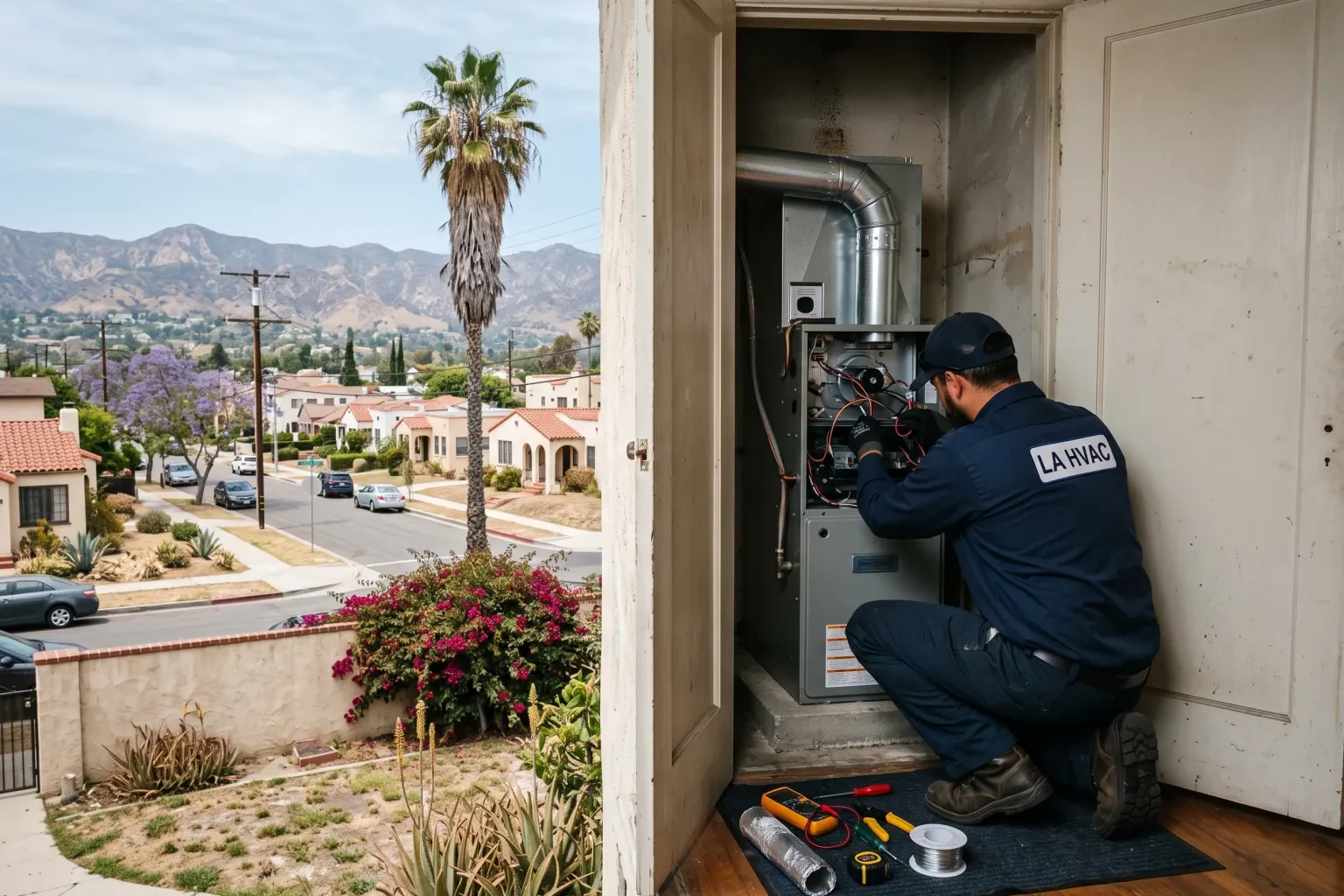
Once you approve the proposal, we schedule the work and pull the permit where required. On the day of installation, the crew lays down floor protection along the path to the equipment, shuts off gas and power, and disconnects and removes the old furnace. The new unit is set in place, connected to the gas line, venting, ductwork and thermostat, and sealed at every joint.
Startup is where careful work shows. We test for gas leaks, measure the gas pressure, check the temperature rise across the heat exchanger, verify that the venting draws properly and confirm that safety controls shut the burner down when they should. Then we walk you through the thermostat, filter location and replacement schedule. Most straightforward replacements take a day, though attic installs and venting changes can stretch the timeline, and we let you know in advance.