The short answer
We repair gas furnaces, wall heaters, heat pumps and ductless systems in Culver City and nearby cities. A technician identifies the system type, finds the fault, explains repair or replacement options in plain language, and tests the system before leaving.
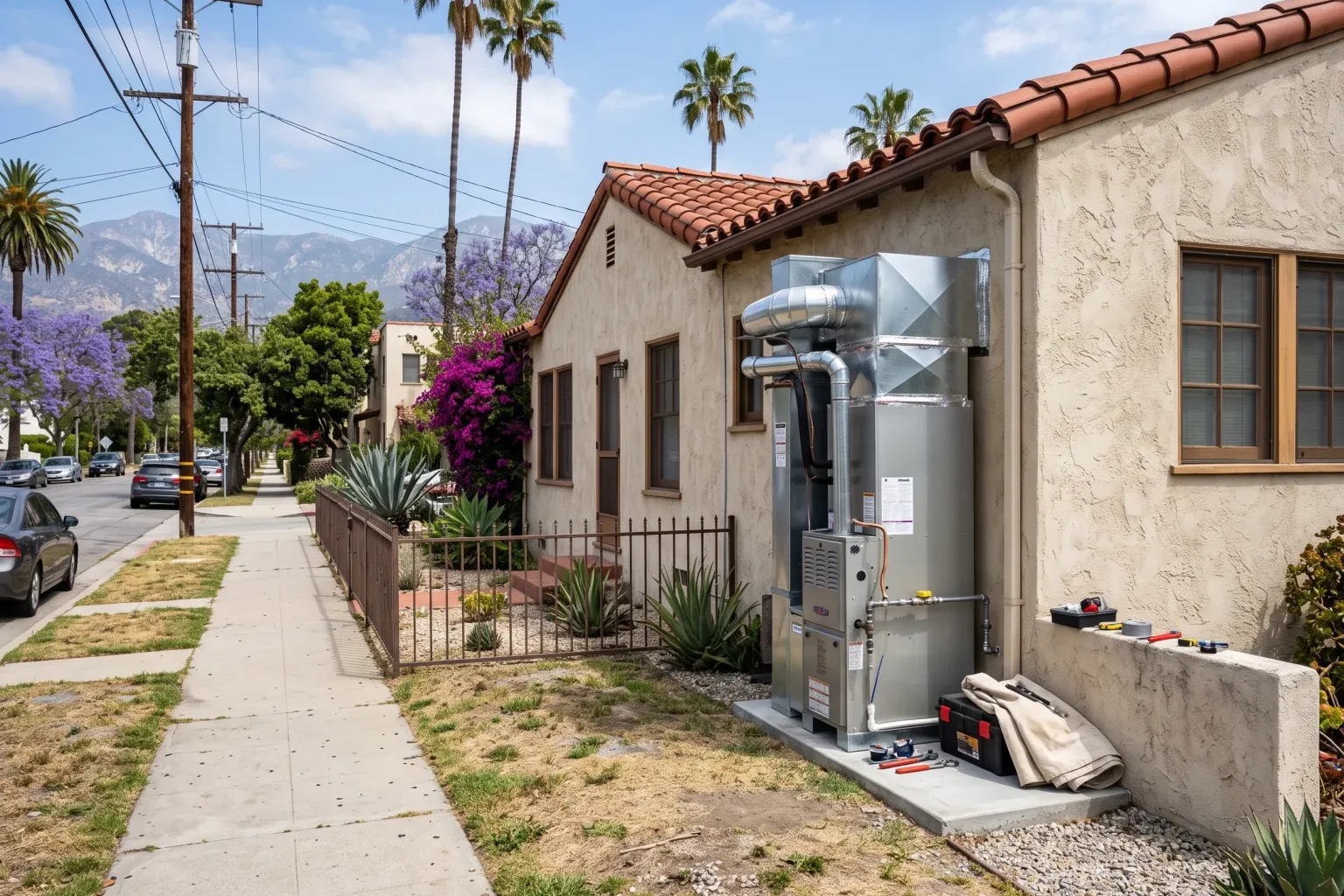
Heating equipment around Culver City comes in more varieties than most people expect. A 1940s bungalow might still rely on a gravity wall heater, a ranch house may have a forced-air gas furnace in the garage, a newer remodel could use a heat pump, and a condo often has a compact fan coil or a ductless head. EliteCore HVAC Solutions repairs all of these, and this page is meant as a practical guide to the whole heating category rather than a single appliance. You will find the problems that most often bring people to us, the way our technicians diagnose different system types, how to think about fixing versus upgrading, what drives the scope of a repair, and a walk-through of the appointment itself.
Common Heating Problems We Hear About
Mild coastal-influenced weather means heaters in this part of Los Angeles often sit unused for long stretches. Dust settles, pilot assemblies corrode, batteries in thermostats die and rodents occasionally move into quiet ductwork. When the first cool night arrives, those small issues surface all at once. These are the complaints we most often hear:
A few quick checks can save a service call. Confirm the thermostat is set to heat rather than cool or off, replace a filter that looks gray, make sure the furnace door panel is fully seated so its safety switch closes, and look at the breaker panel for a tripped circuit. If none of those changes anything, it is time for a technician.
- No heat at all, even with the thermostat set well above room temperature
- A wall heater pilot that will not stay lit
- Heat in some rooms but not others, or one end of the house noticeably colder
- A heat pump that blows lukewarm air, frosts over or will not switch out of cooling
- Strong burning or musty smells once the system starts
- Thermostat screens that go blank or controls that no longer respond
- Banging ducts, rattling panels or a humming sound with no airflow
How Diagnosis Differs by System Type
The first job on any heating call is figuring out exactly what kind of equipment is in the home, because the diagnostic path changes completely from one type to another.
With a gas wall heater or floor furnace, we focus on the pilot assembly, thermocouple or thermopile, gas valve and venting. These units are simple, but many are old, and a careful look at the combustion chamber and vent connection matters for safety.
Forced-air gas furnaces follow an electronic startup sequence. We trace it step by step, checking the inducer, pressure switch, igniter, flame sensor, gas valve, limit controls and blower, and we use the board's error codes as a guide.
Heat pumps and ductless systems need refrigerant-side diagnostics. We look at the reversing valve, defrost controls, outdoor fan and compressor operation, and we measure pressures and temperatures to confirm the charge is correct. Electric resistance backup strips get tested too, since a failed strip can leave a heat pump struggling on colder mornings.
Across every system, we check the thermostat and wiring, the filter, and airflow through the ducts or indoor unit, because a surprising number of no-heat calls trace back to one of those three.
Deciding Between a Repair and an Upgrade
For most calls, repair is the sensible choice. Thermocouples, igniters, capacitors, sensors, motors and thermostats are standard parts that bring a system back without major expense. We tell you the cause and the fix before doing any work.
An upgrade starts to make sense when an old wall heater has a deteriorating combustion chamber, when a furnace's heat exchanger is cracked, when a heat pump's compressor has failed on aging equipment, or when the home has simply never been comfortable with the system it has. Older wall heaters in particular cannot heat a whole house evenly, and some homeowners take the moment to consider a ductless system or a ducted heat pump instead.
If gas equipment is part of the plan, South Coast AQMD Rule 1111 limits NOx emissions from gas fan-type central furnaces in the region and is moving toward zero-emission requirements, with compliance dates that the district sets and revises. We check the current rule so your choice holds up.
Variables That Shape a Heating Repair
Since heating repairs span very different equipment, we price the work after we diagnose it. Several things affect the scope: the type and age of the system, which part has failed and how available it is, how easy the equipment is to reach in an attic, crawlspace or closet, and whether the visit uncovers related issues such as a disconnected duct or a corroded vent pipe.
Getting ahead of the season helps. A tune-up before the weather turns gives us a chance to catch weak parts early, which tends to mean simpler repairs and easier scheduling than waiting until the first cold weekend, when many households call at once.
Multi-unit buildings add another layer. In condos and townhomes, equipment may sit on a shared roof or in a closet with tight clearances, and HOA rules sometimes govern access or replacement. We work within those constraints and tell you up front if building approvals could affect timing.
What to Expect When We Arrive
We begin with a short conversation about what you have noticed and when it started. The technician then inspects the system, runs it through a heating cycle where possible and narrows down the cause. You receive a clear explanation and a recommended repair before work begins.
After the repair, we operate the system long enough to confirm steady heat, safe combustion or correct refrigerant operation, and proper airflow. We check the thermostat settings with you, replace or advise on the filter, and point out any items worth watching in the coming months.
If a gas appliance shows signs of an unsafe condition, such as a cracked heat exchanger or a vent that is pulling apart, we explain the hazard clearly and will not restart the unit until it is corrected. You get the facts and the options, along with time to decide.
Heating Repair by city
- Heating Repair in Los AngelesLocal service & repairs
- Heating Repair in InglewoodLocal service & repairs
- Heating Repair in Beverly HillsLocal service & repairs
- Heating Repair in West HollywoodLocal service & repairs
- Heating Repair in Santa MonicaLocal service & repairs
- Heating Repair in HawthorneLocal service & repairs
- Heating Repair in El SegundoLocal service & repairs
- Heating Repair in Manhattan BeachLocal service & repairs
- Heating Repair in LawndaleLocal service & repairs
- Heating Repair in GardenaLocal service & repairs
- Heating Repair in Hermosa BeachLocal service & repairs
- Heating Repair in Huntington ParkLocal service & repairs