
The short answer
Regular HVAC maintenance cleans, tests and adjusts your system so it runs efficiently and problems are caught early. We recommend a cooling check in spring and a heating check in fall, and we report any repair needs before doing extra work.
Heating and cooling systems rarely fail without warning. Long before a breakdown, a capacitor bulges, a coil clogs with lint, a drain line grows algae or a refrigerant charge slowly drifts low. Routine maintenance is the habit of catching those changes while they are still minor. EliteCore HVAC Solutions performs seasonal tune-ups for air conditioners, gas furnaces, heat pumps and ductless systems in Culver City and the surrounding cities. In a region where coastal homes may barely run the AC until a late-summer hot spell, and where Santa Ana winds can push dust and smoke into every filter, a scheduled checkup keeps equipment ready for the days that actually test it. Below you will find the signals that a tune-up is overdue, our checklist, how maintenance feeds into repair or replacement decisions, what affects the visit, and the appointment flow.
Signals That a Tune-Up Is Overdue
If you cannot remember the last time a technician opened the cabinet, that alone is reason enough. Beyond that, these everyday clues suggest the system needs attention:
Timing matters more than many owners realize. Homes closer to the coast can go weeks without running the air conditioner, then need it all at once when a hot, dry Santa Ana spell rolls through in the fall. Inland neighborhoods lean on cooling for much longer stretches. Either way, a system that has been sitting idle or running hard benefits from a checkup before the next demanding stretch.
- Utility bills creeping upward without a change in how you use the system
- Weaker airflow at the registers or rooms that take longer to cool down
- Dust building up quickly on furniture after a filter change
- Water stains or drips near the indoor unit or furnace closet
- The outdoor unit is buried in leaves, ivy or debris from the yard
- Clicking, buzzing or humming that was not there last season
- Ice on the refrigerant lines or the indoor coil during cooling
Our Seasonal Maintenance Checklist
A tune-up is more than a filter swap. Our cooling visit focuses on the parts that work hardest during warm months, and the heating visit covers combustion and safety. For heat pumps, which do both jobs, we check performance in both modes.
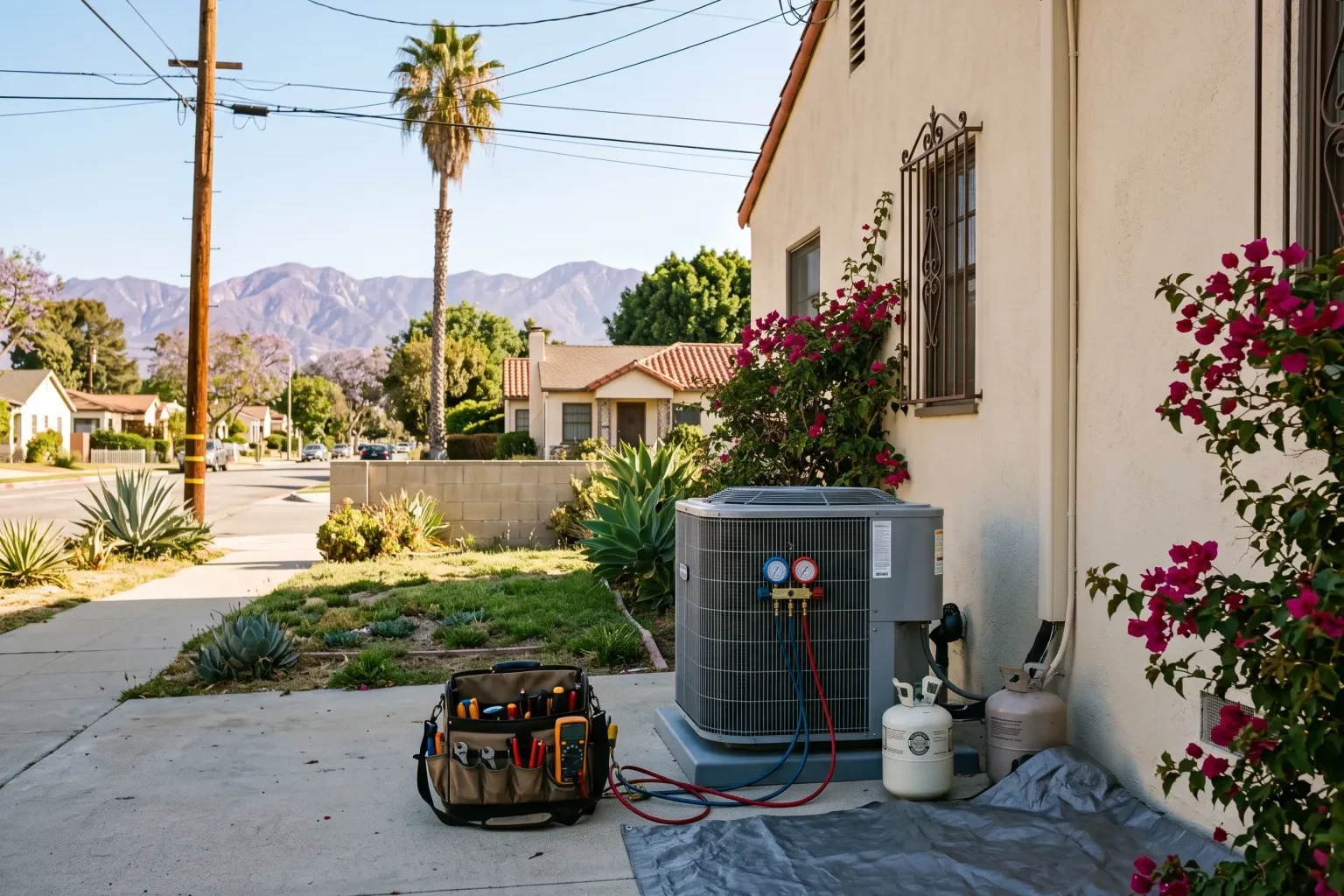
During a cooling tune-up, we clean or rinse the outdoor condenser coil, check the condenser fan motor and blades, test the capacitor and contactor, measure refrigerant pressures and the temperature split across the indoor coil, and flush the condensate drain line so it does not back up into the ceiling or closet. We also inspect the electrical disconnect and tighten connections.
A heating tune-up for a gas furnace includes checking the igniter and cleaning the flame sensor, verifying the inducer motor and pressure switch, measuring gas pressure, inspecting the burners and the heat exchanger for cracks or corrosion, confirming the flue vents properly and testing the limit and rollout safety switches. On every visit, we look at the blower motor and wheel, check the thermostat's calibration and replace or advise on the filter.
For ductless mini-splits, we clean the indoor filters and the blower wheel, which can collect a surprising amount of debris, check the drain pan and line, and inspect the outdoor unit the same way we would a central condenser.
How Maintenance Informs Repair and Replacement Choices
One of the most useful outcomes of a tune-up is information. Readings taken visit after visit show whether a compressor is drawing more current, whether a refrigerant charge keeps dropping, or whether a heat exchanger is starting to deteriorate. That history turns a stressful emergency decision into a planned one.
When we find a part on the edge of failing, we explain what it is, what happens if it fails and what replacing it would involve. Small items like a weak capacitor or a worn contactor are often worth replacing during the visit, with your approval. Larger issues, such as an aging furnace with a deteriorating heat exchanger, are presented with a repair option and a replacement option so you can plan ahead. If a gas furnace replacement enters the discussion, we note that South Coast AQMD Rule 1111 governs NOx emissions from gas furnaces in the region and is being amended toward zero-emission standards; we check the current compliance dates before any recommendation.
What Affects a Maintenance Visit
The scope of a maintenance appointment depends on what you have. A single split system is quicker to service than a home with two furnaces, a separate heat pump for an addition and a multi-zone ductless setup. Equipment location also matters: attic air handlers in older stucco homes take more time to reach than a garage unit.
The condition of the system plays a role, too. An outdoor coil packed with debris, a drain line already clogged or a badly dirty blower wheel requires more cleaning than a system that has been serviced regularly. We tell you what the visit will include before we start, and any additional repairs are quoted separately so you can decide.
- Number and type of systems in the home
- Accessibility of attic, crawlspace or rooftop equipment
- How long it has been since the last professional service
- Whether you choose a single visit or a recurring seasonal schedule
How a Tune-Up Appointment Runs
We schedule a time that works for you and arrive with the cleaning supplies and common parts. The technician asks about anything you have noticed, then works through the checklist, recording readings as they go.
At the end of the visit, you get a summary of what was cleaned, what was measured and what, if anything, needs attention now or in the future. We also share simple steps you can take between visits, like changing filters more often after a smoky stretch of wildfire season and keeping plants trimmed away from the outdoor unit.
Many homeowners prefer a recurring schedule so they do not have to remember. We can set up reminders for a spring cooling visit and a fall heating visit, timed ahead of the busy weeks when everyone discovers a problem at once. If you have several systems, we can service them in the same appointment to keep things simple.