
The short answer
Indoor air quality service finds out why your home feels dusty, stuffy or smoky and fixes it at the source. We check filtration, ducts, ventilation and humidity, then suggest targeted fixes such as better filters, duct sealing or air cleaners.
The air inside a home moves through the HVAC system many times a day, and whatever that system collects, or fails to collect, ends up in the rooms you breathe in. Around Culver City, a few local conditions make this especially relevant: wildfire smoke drifting in from fires elsewhere in Southern California, dry Santa Ana spells that kick up dust, older homes with leaky attic ducts that pull in insulation fibers, and condos where air circulates through tight spaces. EliteCore HVAC Solutions evaluates and improves indoor air quality through the heating and cooling equipment you already have. On this page, you will learn which symptoms point to an air quality issue, how we investigate the source, when cleaning or repair is enough versus when new equipment helps, what influences the scope of a project, and how a visit works.
Symptoms of an Indoor Air Problem
Air quality issues are easy to dismiss because they build slowly. Pay attention when several of these show up together:
Local weather patterns explain a lot. Dry summers mean dust stays airborne, and the fall Santa Ana winds can carry fine grit and, in some years, smoke across the whole basin. Homes with gaps around windows, doors and attic hatches let that material in, and the HVAC system then spreads it from room to room.
- Dust returns to surfaces within a day or two of cleaning
- Allergy symptoms that ease when you leave the house and return when you come back
- A musty or stale smell when the system starts, especially from certain vents
- A lingering smoky odor indoors after nearby or distant wildfires
- Dark streaks around supply registers or on the ceiling near them
- Rooms that feel stuffy or clammy even when the temperature is right
- Very dry air in winter that leaves skin and sinuses irritated
How We Track Down the Source
Buying an air purifier without understanding the cause is like mopping around a leak. Our evaluation follows the air path through the house to find where contaminants enter and where they collect.
We start at the filter. Many systems use thin filters that catch only large particles, or a filter rack that leaves gaps around the edges so air bypasses it entirely. We check the filter's rating, its fit and whether the system's blower can handle a denser filter without choking airflow.
Next comes the ductwork. In older stucco homes, attic ducts often have separated joints, torn insulation or crushed sections. A leaky return duct pulls air from the attic, garage or wall cavities and sends it straight to your living spaces. We inspect accessible runs and look for telltale signs like dirt trails at the seams.
We also look inside the equipment. A dirty evaporator coil, a blower wheel caked with debris, or a drain pan holding standing water can all contribute to odors and microbial growth. Finally, we review ventilation habits, such as range hood and bath fan use, and talk about humidity and whether the home feels too dry or too damp.
Cleaning and Repair Versus New Equipment
A good share of air quality complaints can be solved with what is already in place. Upgrading to a properly fitted, higher-efficiency filter, sealing a leaking return, cleaning the coil and blower, clearing a clogged condensate drain and replacing damaged duct sections often make a noticeable difference by themselves.
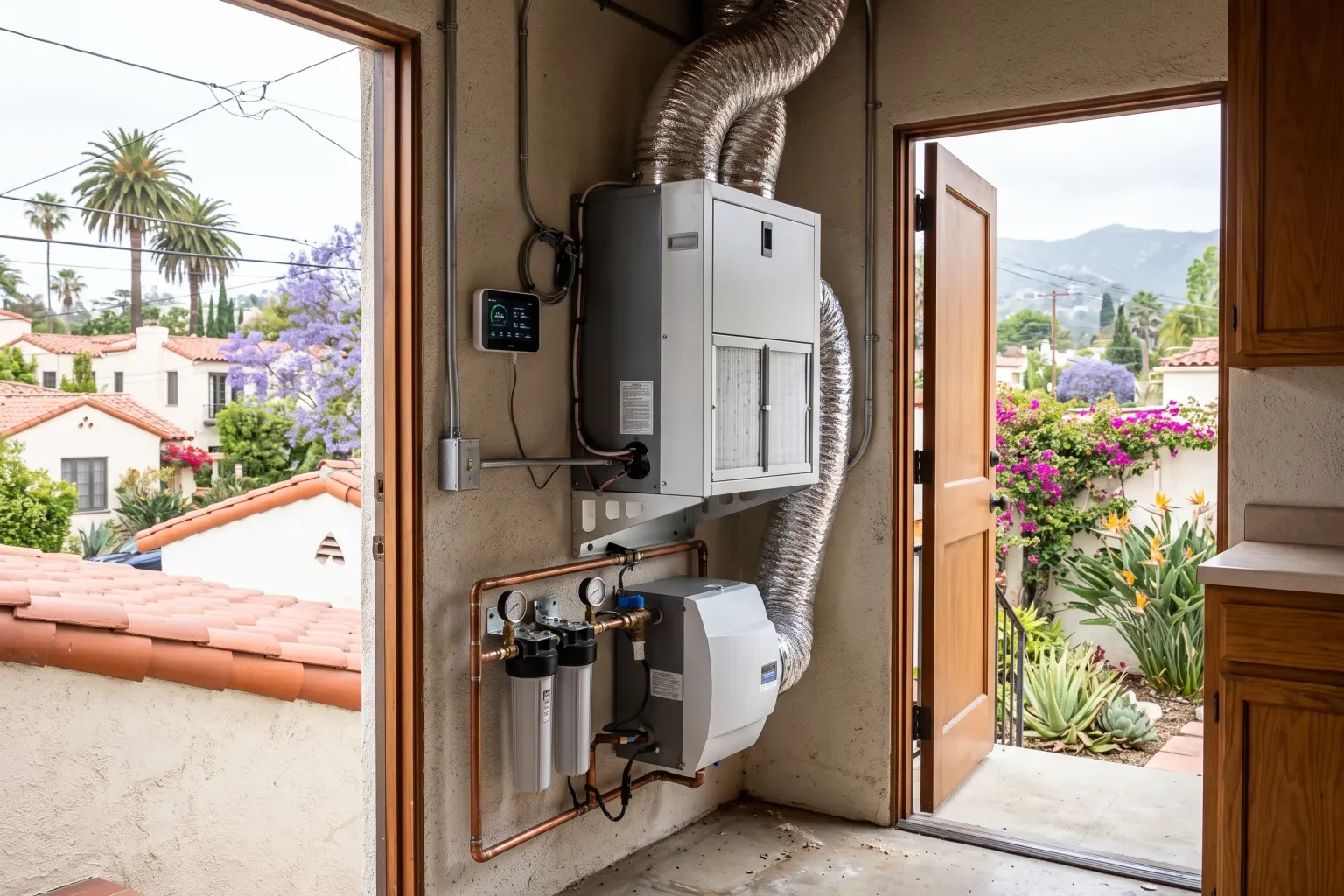
Additional equipment becomes worthwhile when a home has ongoing needs, such as a household member with allergies or asthma, frequent smoke exposure during fire season, or a layout where the existing system cannot hold a better filter. Options we may discuss include a media filter cabinet that holds a thicker, high-efficiency filter, a whole-home air cleaner mounted in the ductwork, ultraviolet lights aimed at the coil, ventilation equipment that brings in filtered fresh air, and whole-home humidifiers or dehumidifiers. We explain what each can and cannot do, and we will not recommend equipment that does not match the problem we found.
What Influences the Scope of an Air Quality Project
Because the fixes range from a better filter to duct replacement, we provide recommendations and pricing after the evaluation. These factors shape the work:
Equipment choices involve trade-offs. A thicker media filter needs space near the air handler, an electronic air cleaner needs power and periodic cleaning, and ventilation equipment needs an outside air path. We look at the room around your system before suggesting any of them, so the recommendation fits the house you actually have.
- Whether the solution is cleaning and sealing or adding new equipment
- The condition and accessibility of the ducts, especially in tight attics
- The size and design of the existing air handler and its filter slot
- How many zones or systems serve the home
- Any electrical or condensate work needed for added equipment
What Happens During an Air Quality Visit
The visit begins with a conversation about what you notice: when symptoms are worst, which rooms bother you most and whether smoke, dust or odor is the main concern. The technician then inspects the filter setup, equipment and accessible ductwork, and checks airflow at the registers.
Afterward, we walk you through what we found, often with photos from the attic or inside the unit, and lay out options from the simplest fix up. If you approve work that day, such as a filter upgrade or coil cleaning, we can often complete it on the spot. Larger projects are scheduled separately. We also share practical habits, like closing windows and running the fan on recirculate during smoke events, and checking the filter more often in dusty months.
If smoke is your main concern, ask about running the system fan with a high-efficiency filter installed during wildfire episodes. Paired with closed windows and doors, this approach can help reduce the particles that settle indoors.