The short answer
A new AC is worth considering when the current one is failing repeatedly, cannot keep the house comfortable, or your home has never had central cooling. EliteCore HVAC Solutions sizes the system to your house, checks the ducts and electrical service, and explains each option before installation.
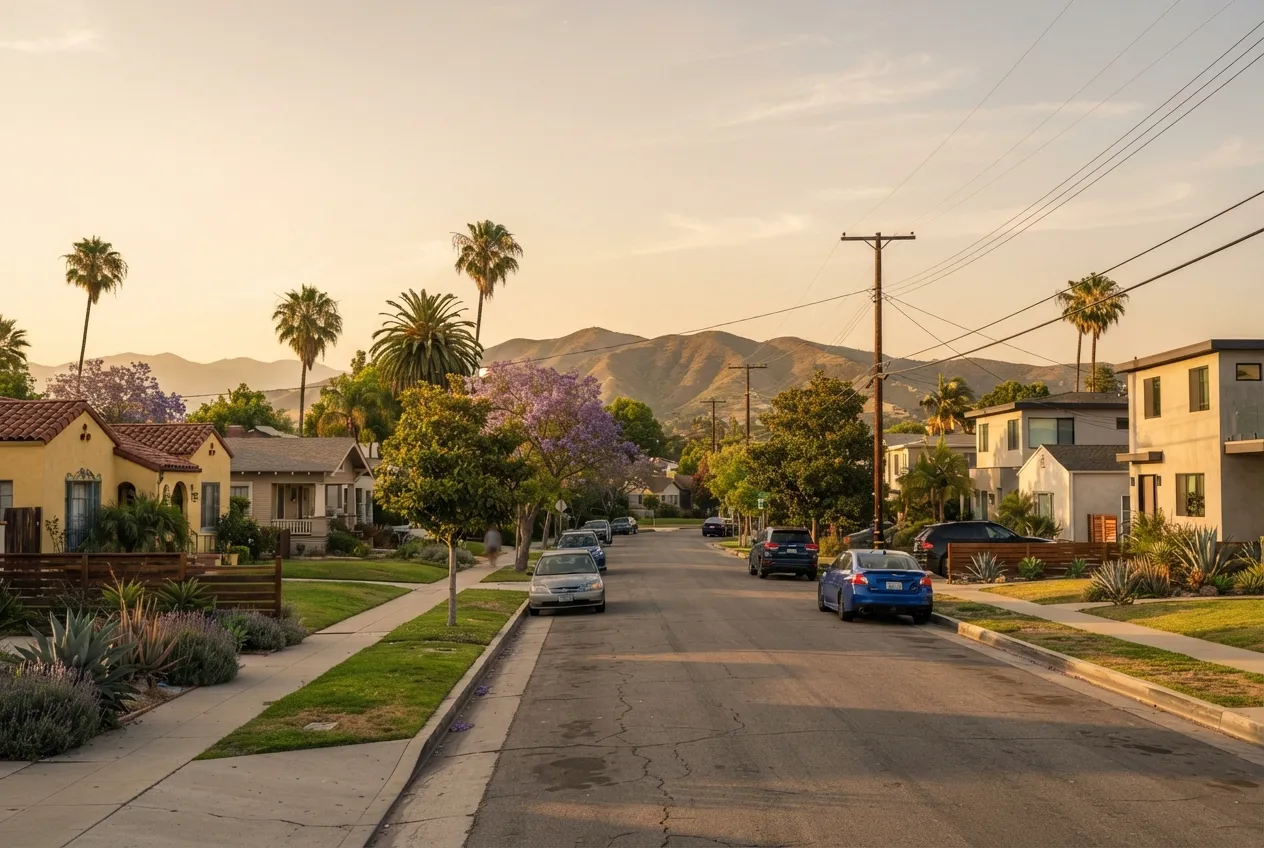
Putting a new air conditioner into a house is less about the box outside and more about how that equipment fits the building around it. A system sized by guesswork, connected to tired attic ductwork, or placed where its condenser bakes against a west-facing wall will struggle no matter what the label says. EliteCore HVAC Solutions plans and installs central AC, heat pump and ductless systems for homes in Culver City and nearby parts of Los Angeles County. Many of the houses here were built long before central air was standard, so a new install often means working around plaster ceilings, small closets, shallow attics and electrical panels that were never meant to carry a compressor. Below you will find how to tell whether it is time for new equipment, what we evaluate before recommending anything, the realistic options on the table, the factors that move the cost, and what to expect on installation day.
Signals that new equipment is the right move
Nobody needs to replace a working air conditioner just because it is older. The case for new equipment builds when several things line up: repair visits are becoming a seasonal habit, a major component like the compressor or the indoor coil has failed, or the rooms on one side of the house stay uncomfortable even after repairs.
Homes that never had cooling are another common reason. Inland neighborhoods heat up much more than areas closer to the ocean, and fall Santa Ana winds can push hot, dry air across the whole basin for days. Families who once got by with fans and open windows often decide that a ducted system or a set of ductless heads is worth adding. Wildfire smoke is part of that calculation too, since a closed house with filtered, conditioned air is easier to live in during a smoky week.
- The compressor, coil or another major part has failed on an aging system
- Your current unit uses an older refrigerant that is becoming harder to service
- Energy use keeps climbing while comfort keeps dropping
- The house has no central cooling, or only a window unit or two
- You are remodeling, adding a room, or converting a garage into living space
What we evaluate before recommending a system
Sizing comes first. We look at the square footage, ceiling heights, window orientation, insulation, and how the house is shaded, because a bungalow with big south-facing windows needs something different from a shaded condo of the same size. An oversized unit cools quickly but cycles off before removing humidity, while an undersized one runs nonstop on the hottest afternoons.
Next, the ductwork. If the existing ducts are leaky, undersized or crushed in places, a new system will inherit those problems. We inspect what is accessible, measure airflow where possible, and tell you plainly whether the ducts can be reused, need repair, or should be redesigned.
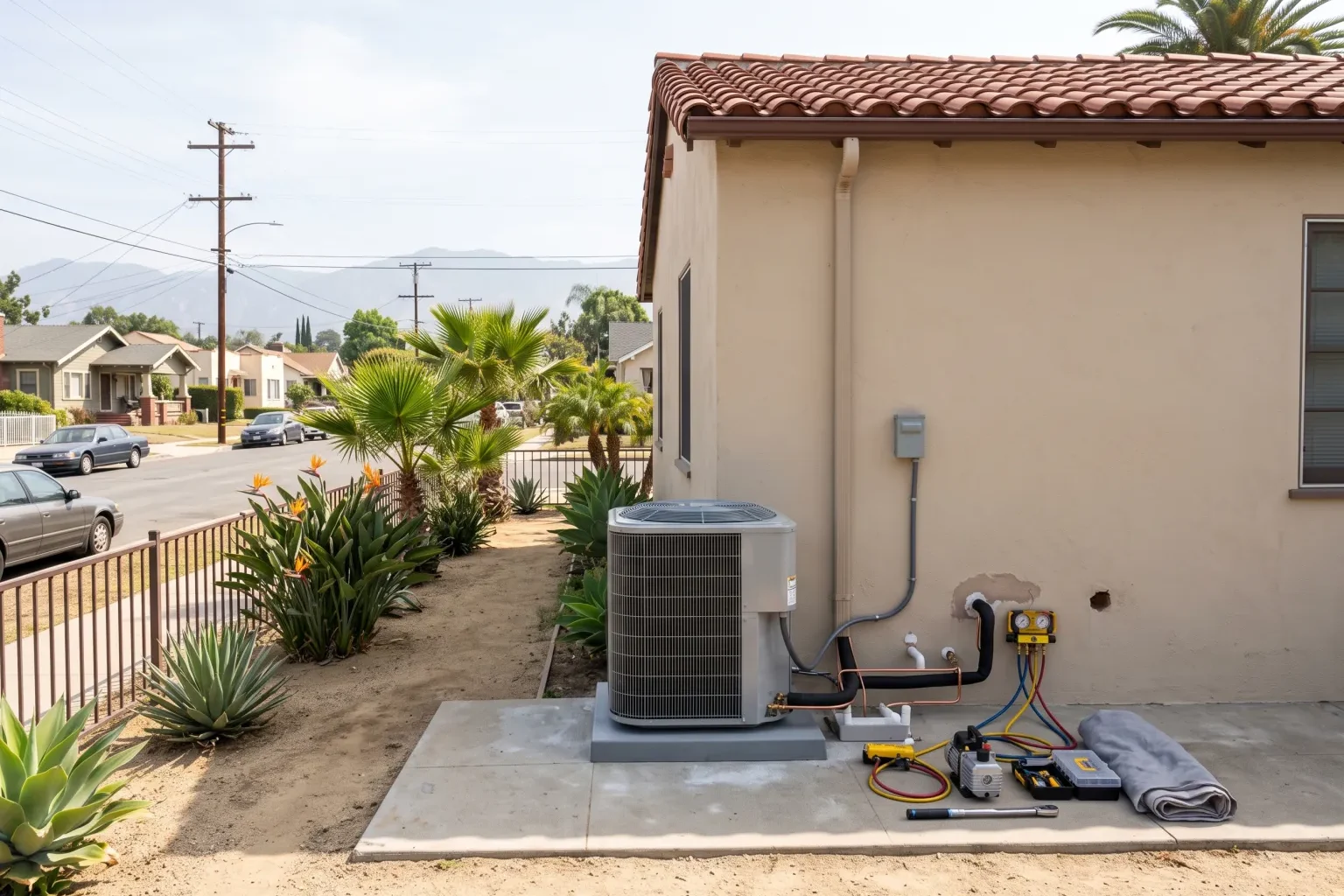
Finally, the practical constraints: where the outdoor unit can sit with enough clearance, whether the electrical panel has capacity for the new load, how the condensate will drain, and whether a gas furnace paired with the AC is due for replacement as well. If a furnace is part of the project, South Coast AQMD Rule 1111 limits NOx emissions from new natural-gas furnaces in this region and has been moving toward zero-emission requirements, so we check the current compliance dates as part of planning.
Your options: repair, swap, or rethink the system
Not every install conversation ends with a full replacement. If the existing system has one failed part and is otherwise in decent shape, repairing it may be the sensible choice for now. We will say so when that is the case.
When replacement does make sense, there are usually a few paths worth comparing. A like-for-like swap keeps the same layout and ducts. A heat pump replaces both the AC and a gas furnace with one electric system that heats and cools. Ductless mini-splits suit homes without ducts, additions, and rooms the main system has never reached well. Each has tradeoffs in comfort, installation scope and long-term operating cost, and we walk through them with you.
On rebates, the honest answer is that it depends on your address. LADWP residential customers can apply for rebates on qualifying heat pump systems, with the amount tied to the unit's SEER2 and HSPF2 ratings, and the application goes in after installation within 12 months of purchase. Many homes outside the City of Los Angeles are served by Southern California Edison instead, with different offers. We confirm what is currently available before including it in a quote. The federal 25C credit for heat pumps ended for systems placed in service after 2025.
What shapes the cost of an installation
Every quote we write is specific to the house, so we do not post prices. These are the factors that make the biggest difference:
- System type and capacity: central AC, heat pump, or a multi-zone ductless setup
- Efficiency rating of the equipment you choose
- Duct repair, sealing or replacement needed to support the new unit
- Electrical work, such as a new circuit, disconnect or panel upgrade
- Access to the attic, closet or crawlspace where the indoor equipment goes
- Pad, line set length and placement of the outdoor unit
- Permits and any required inspections from the local building department
Installation day, step by step
Once you approve the plan, we schedule the work and handle the permit. On the day of installation, the crew protects floors and walkways, disconnects and recovers refrigerant from the old system, and removes the old equipment from the property.
The new outdoor unit is set on its pad, the indoor coil or air handler is installed, and the refrigerant lines are connected, pressure tested and evacuated before the system is charged. We connect the thermostat, the condensate drain and the electrical supply, then start the system and measure temperatures, pressures and airflow to make sure it performs the way it should.
Before we leave, we show you how to use the thermostat, where the filter goes and how often to change it, and what normal operation sounds like. If a city inspection is required, we coordinate it with you.
AC Installation by city
- AC Installation in Los AngelesLocal service & repairs
- AC Installation in InglewoodLocal service & repairs
- AC Installation in Beverly HillsLocal service & repairs
- AC Installation in West HollywoodLocal service & repairs
- AC Installation in Santa MonicaLocal service & repairs
- AC Installation in HawthorneLocal service & repairs
- AC Installation in El SegundoLocal service & repairs
- AC Installation in Manhattan BeachLocal service & repairs
- AC Installation in LawndaleLocal service & repairs
- AC Installation in GardenaLocal service & repairs
- AC Installation in Hermosa BeachLocal service & repairs
- AC Installation in Huntington ParkLocal service & repairs