The short answer
Call for furnace repair if the unit won't ignite, blows cold air, short-cycles, smells of gas or makes new noises. We diagnose the cause, explain the fix and whether repair still makes sense, and finish with safety checks.
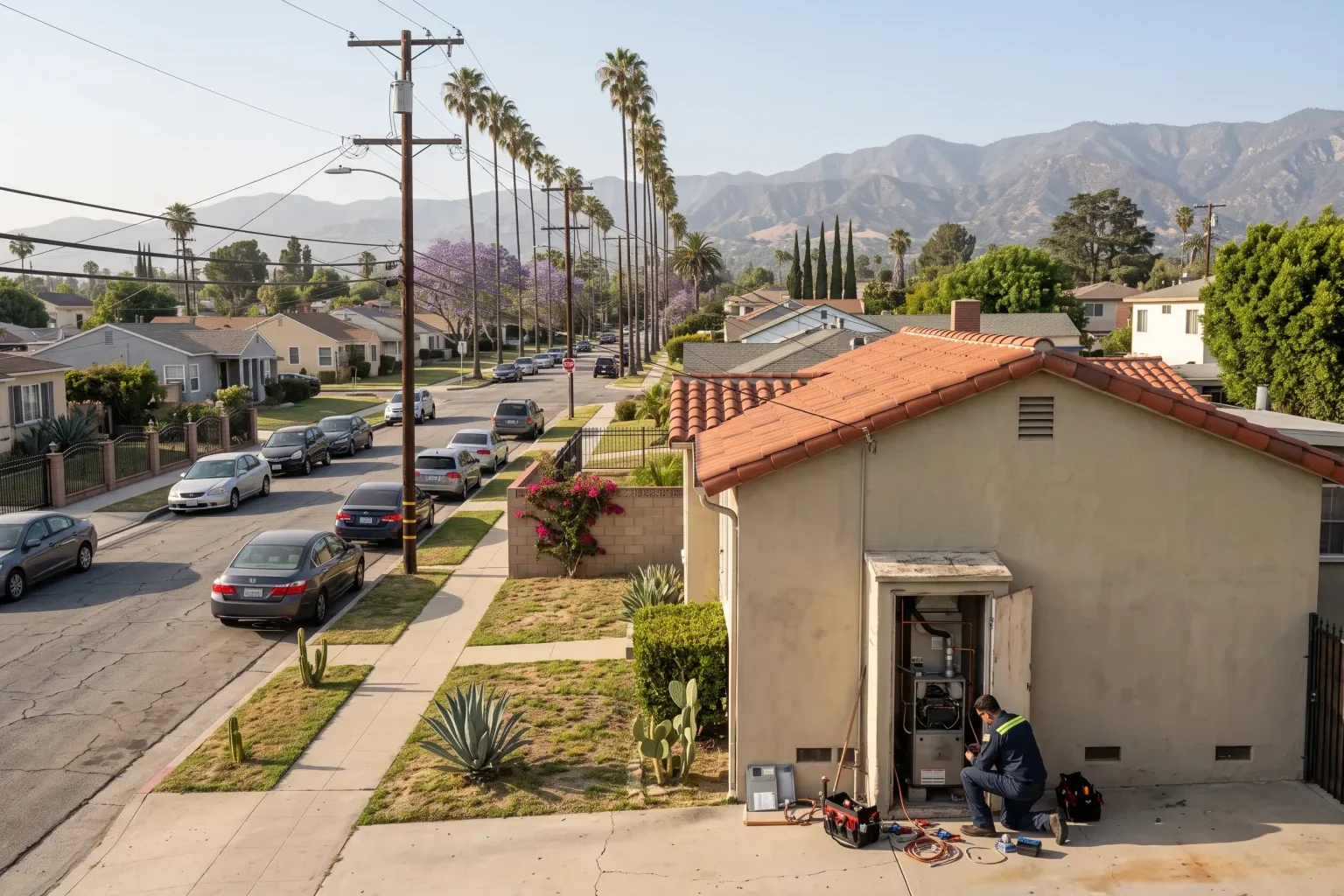
Gas furnaces on the Westside lead quiet lives. They may go unused from April through November, then get switched on during the first cold evening of the year, and that is often the moment a weak igniter, a clogged filter or a dusty flame sensor finally gives up. EliteCore HVAC Solutions repairs gas furnaces in Culver City and the communities around it, from closet units in older bungalows to attic-mounted systems in two-story homes and compact furnaces in condos. This page walks through the symptoms that call for a technician, the components we test on every repair visit, how we help you decide between fixing and replacing, and the variables that shape what a repair involves.
Symptoms That Call for a Technician
Some furnace problems announce themselves loudly; others creep in until the house simply never feels warm. Here are the warning signs homeowners describe most often when they reach out to us.
If you ever smell gas, leave the house, avoid flipping switches, and call the gas utility's emergency line from outside before contacting us. A carbon monoxide alarm that sounds near the furnace calls for the same caution.
- The thermostat calls for heat but the burners never light
- Air from the registers feels cool or barely warm
- The furnace turns on and off every few minutes without finishing a cycle
- Booming, squealing, scraping or clicking sounds you have not heard before
- A burning-dust smell that lingers well past the first few minutes of the season
- The blower keeps running even after the house reaches the set temperature
- A blinking light code on the control board behind the furnace panel
What We Test on a Repair Visit
Guesswork wastes time and money, so our technicians follow the furnace's own sequence of operation. A modern gas furnace runs through a set of steps every time it starts: the thermostat sends a signal, the inducer motor clears the combustion chamber, a pressure switch confirms the draft, the igniter heats up, the gas valve opens, the flame sensor proves the flame and the blower begins moving air. A failure at any step stops the chain, and the error code or behavior usually points to where it broke.
From there we test the specific parts involved. We check the hot surface igniter for resistance, clean and test the flame sensor, verify the inducer motor and pressure switch, measure gas pressure at the valve, and inspect the limit switch that shuts the burner off if the unit overheats. We look at the blower motor, capacitor and wheel, because a dirty blower reduces airflow and trips safety limits. A clogged filter or a blocked return grille is a surprisingly common cause of overheating, especially in homes where the return sits in a hallway that collects dust.
Every visit includes a look at the heat exchanger and the flue. A crack in the heat exchanger or a disconnected vent pipe is a safety issue, and we explain clearly what we see if either turns up.
Fix It or Plan for a Replacement
Most furnace calls end with a repair. Igniters, flame sensors, pressure switches, capacitors and control boards are replaceable parts, and once fixed the furnace can run normally for a long time. We give you the diagnosis and the recommended repair before we start, so there are no surprises.
Sometimes the honest answer is different. When a furnace is old, has a cracked heat exchanger, needs a major part that is no longer produced, or has needed repeated service calls in recent seasons, investing more in it may not make sense. In that situation we explain why and outline what a replacement would involve, including how South Coast AQMD Rule 1111, which limits NOx emissions from gas furnaces sold and installed in the region and is being amended toward zero-emission requirements, may shape your equipment choices. Because the district sets and revises the compliance dates, we check the current rule before recommending a specific unit. You are never pressured; the decision stays with you.
What Determines the Scope of a Repair
We quote repairs after diagnosing the problem rather than over the phone. A handful of variables shape what the job involves:
Season timing plays a part as well. Because so many homes nearby fire up their heaters on the same handful of cold nights, demand spikes quickly. Booking a check in the fall, before you actually need heat, usually means easier scheduling and time to order a less common part without leaving the house cold.
- Which component failed, since a flame sensor cleaning is quicker than replacing a control board or blower motor
- The age and brand of the furnace and how easily its parts can be sourced
- Where the unit sits, because attic and crawlspace furnaces take longer to reach and work on
- Whether more than one problem is present, such as a failed igniter combined with a dirty blower
- Any related duct, vent or electrical issues found during the inspection
How a Furnace Repair Call Unfolds
When you contact us, we ask a few questions about what the furnace is doing, how old it is and where it is installed. That helps the technician arrive with the most likely parts. On site, the technician listens to your description, runs the furnace through a heating cycle and reads any error codes before opening panels.
After finding the cause, we explain it in plain language, show you the part involved when possible and outline the repair. With your approval, we complete the work, then run the furnace through several full cycles to confirm stable ignition, proper temperature rise and correct safety shutoff. Before leaving, we replace or recommend replacing the filter and point out anything you should keep an eye on.
If the needed part is not on the truck, we explain how long it should take to arrive and whether the furnace can run safely in the meantime. When it cannot, we leave it shut off and tell you exactly why, rather than leaving a questionable unit running in your home overnight.
Furnace Repair by city
- Furnace Repair in Los AngelesLocal service & repairs
- Furnace Repair in InglewoodLocal service & repairs
- Furnace Repair in Beverly HillsLocal service & repairs
- Furnace Repair in West HollywoodLocal service & repairs
- Furnace Repair in Santa MonicaLocal service & repairs
- Furnace Repair in HawthorneLocal service & repairs
- Furnace Repair in El SegundoLocal service & repairs
- Furnace Repair in Manhattan BeachLocal service & repairs
- Furnace Repair in LawndaleLocal service & repairs
- Furnace Repair in GardenaLocal service & repairs
- Furnace Repair in Hermosa BeachLocal service & repairs
- Furnace Repair in Huntington ParkLocal service & repairs